

Children and youth of colour continue to be disproportionately affected by systemic gaps in education and child welfare.
In Hamilton, these gaps often intersect, placing additional strain on families already navigating complex challenges such as language barriers, housing instability, food insecurity, and limited access to culturally responsive supports.
Empowerment Squared, a United Way-supported agency, is addressing these inequities not only by supporting individual families, but by working to change the systems themselves.
Where Systems Fall Short
“We continue to see the overrepresentation of youth and families in disciplinary processes, especially BIPOC (Black, Indigenous, and People of Colour) youth including newcomers, emerging multilingual learners, differently abled youth, and youth who identify as 2SLGBTQ+,” says Rebecca Morikawa-Hayes, Manager, Systems Navigation at Empowerment Squared.
She also highlights the overrepresentation of racialized and newcomer caregivers in child welfare reporting.
“Often, families are reported because of communication gaps, language barriers, or information gaps regarding parenting norms in Ontario. These are not necessarily child welfare concerns, but misunderstandings.”
At the same time, schools face internal capacity challenges.
“There is often a lack of educational assistants and learning resource teachers, limited awareness of supportive programs, and gaps in communication between educators and caregivers regarding student progress,” Rebecca explains.
Cross System Partnerships
Recognizing these patterns through firsthand work with families, Empowerment Squared began forging partnerships with the Hamilton Wentworth District School Board and Hamilton Child and Family Supports.
“These partnerships arose after identifying gaps at the intersection of both systems while supporting families through their lived experiences,” Rebecca explains.
“We saw educators reporting families to child welfare because newcomer and racialized families were not provided education on parenting laws in Ontario. At the same time, families were seeking support from us to fill gaps in the education system that were remaining unaddressed.”
Changing Practice Within Child Welfare
The impact of these partnerships is visible across both systems.
Within child welfare, a dedicated Racialized and Newcomer Team was created to respond to the unique needs of families.
“This team is specifically trained to support racialized and newcomer families when they are reported,” Rebecca says. “Where there are no child welfare concerns, families are often referred to our programming for culturally relevant wrap around support.”
Child welfare staff also participate in Empowerment Squared’s Information Literacy workshops for parents and caregivers.
“This provides caregivers the opportunity to ask questions directly from child welfare professionals and clarify the legalities of parenting in Ontario,” she explains. “It also gives child welfare staff a chance to address misinformation that exists in the community regarding their role.”
Embedding Equity Within Schools
Within the education system, equity focused roles such as Graduation Coaches and Systems Navigators have expanded to better support racialized and newcomer families.
Culturally relevant programs, including the School Readiness Program and Career Discovery Program, now operate directly within schools, helping students remain engaged and supported. Educators increasingly refer families to Empowerment Squared as a trusted community partner.
With United Way funding, Empowerment Squared was able to move beyond short-term support and invest in sustainable, collaborative solutions.
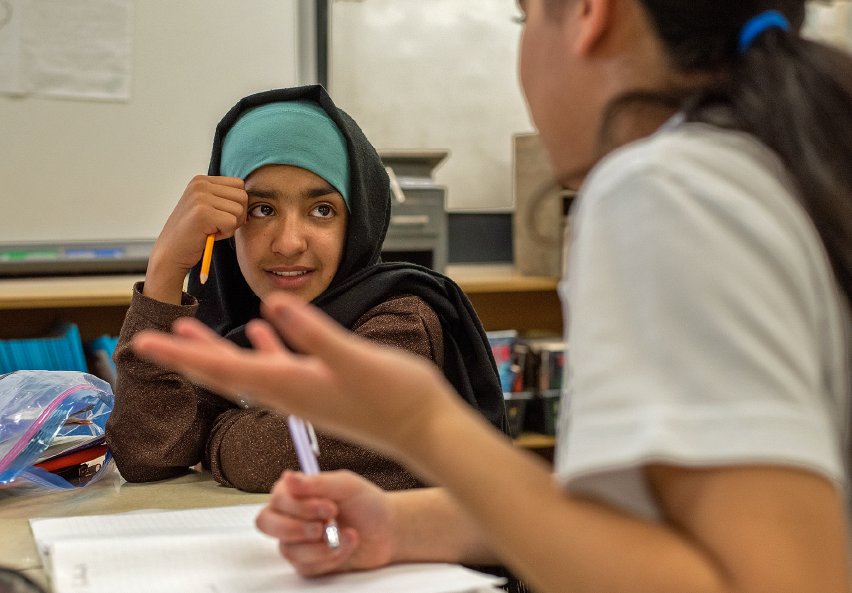
“United Way’s funding allowed us to continue supporting youth and families with programming that fills existing gaps in the community,” says Rebecca, pointing to initiatives such as Homework Circle, the Student and Family Advocacy Program, Summer and March Break Camps, and the Summer Soccer Program.
Click here to learn more about United Way’s impact and donate today to support programs advancing racial equity and systemic change in our community.

